


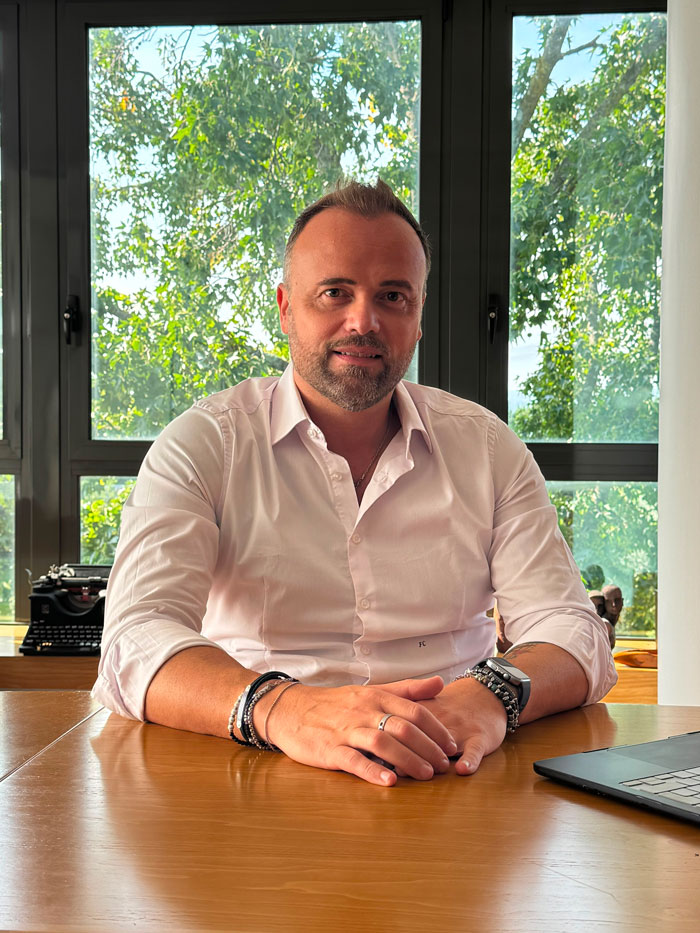
As global textile manufacturers race to elevate product quality while meeting strict environmental standards, cutting-edge finishing machinery remains a critical differentiator. In this exclusive interview, we explore how Italian engineering pioneer Biancalani—founded in Prato in 1957—is shaping the future of textile finishing.
Could you provide an overview of your company?
Biancalani is an Italian manufacturer of textile finishing machinery, founded in Prato in 1957. We develop and manufacture 100 per cent Made-in-Italy solutions for fabric preparation, washing, drying, and finishing, including AIRO for versatile wet processing, tumble-drying and mechanical softening; AIRO24, the continuous open-width dryer for tumbling treatments; AQUARIA continuous open-width washing technology; AIRBOX compact dryers; and specialised machinery for washing and milling woollen fabrics.
With more than 2,500 machines installed in over 100 countries, we serve a wide range of textile segments, from apparel and fashion to home textiles, technical fabrics and processes for lyocell, cupro, modal and other cellulosic fibres. Continuous R&D is at the core of our business, with more than 50 international patents developed over the years.
How has the company performed during 2025-26?
During 2025-26, Biancalani continued to develop and consolidate its technological offering, with particular attention to international markets and technologies that improve both fabric quality and production efficiency.
A major focus has been further developing our AIRO24 and AQUARIA technologies, along with applications aimed at reducing water, energy, and chemical consumption. We have also strengthened our presence in markets where textile manufacturers are investing in more flexible, sustainable and high-performance finishing processes.
What differentiates your solutions in the global market?
Our main strength is the combination of process innovation, fabric quality, and flexibility. A particularly distinctive element is our long-standing expertise in using air as an active element in fabric treatment. We do not simply supply machinery; we work closely with customers to develop the right process for their specific fabrics and production requirements.
Our long experience in textile finishing, combined with continuous R&D and close cooperation with textile mills, allows us to develop solutions that can deliver tangible improvements in handle, appearance, shrinkage control, and overall fabric quality. This cooperation also includes technological consulting and testing directly on customers’ fabrics.
India is being positioned as an emerging global textile manufacturing hub. What are the key hurdles, and what role can machinery providers play?
India has enormous potential, but competitiveness will increasingly depend on productivity, process consistency, quality, and sustainability. One of the challenges is moving from cost-based competitiveness towards higher-value, technologically advanced textile production.
Machinery manufacturers can contribute by introducing technologies that improve productivity and process repeatability while reducing water, energy and chemical consumption. Equally important is providing technical support and process know-how, helping Indian manufacturers achieve consistent quality according to international standards.
What are the major technology trends transforming the industry?
Automation, digitalisation and data management are becoming increasingly important. Modern textile machinery needs to provide not only mechanical performance but also better control and repeatability of the process and access to useful production data.
AI and IoT can further contribute to predictive maintenance, process optimisation and real-time monitoring. However, at Biancalani, we believe that technology should always serve the final objective: producing better fabric, more efficiently and with lower environmental impact.
How are your solutions helping manufacturers achieve sustainability goals?
For Biancalani, sustainability is closely connected to process efficiency: Our technologies are designed to achieve the required fabric result while reducing the resources needed to obtain it.
For example, AQUARIA enables continuous open-width washing with adjustable dwell times and effective mechanical action, maintaining liquor ratios as low as 1:6, depending on the process, while AIRO24 combines efficient drying with mechanical softening and finishing effects in a continuous open-width process, reducing and, in some cases, eliminating the need for chemical softeners.
We also develop specific processes for fibres such as lyocell, cupro and modal, helping manufacturers meet both environmental objectives and demanding international quality standards.
What role do exports play in your business strategy?
Exports are fundamental to Biancalani’s strategy. Our machines are used in more than 100 countries, and international markets have always been an essential part of our growth.
We are continuing to strengthen our presence in established textile markets while developing opportunities in emerging manufacturing hubs, particularly where companies are investing in modern finishing technologies, higher fabric quality and more sustainable production. India is certainly one of the markets with significant long-term potential for Biancalani.
How do initiatives such as PM MITRA, PLI and the National Technical Textiles Mission create opportunities?
These initiatives can play an important role in developing a stronger and more integrated Indian textile industry. Investments in manufacturing capacity need to be accompanied by investments in modern machinery, technology and know-how as well as in the development of technical skills.
For technology providers such as Biancalani, this creates opportunities to contribute to the development of higher-value textile production, particularly in areas where quality, productivity, process consistency and sustainability are becoming increasingly important competitive factors.
What are your growth plans for 2026-27?
Our priority for 2026-27 is to continue investing in R&D and in the development of new applications for our core technologies. We will focus particularly on solutions that combine improved fabric quality and process control with lower consumption of water, energy and chemicals.
At the same time, we intend to strengthen our international presence, develop new technology partnerships and further consolidate our position in strategic markets such as India. Our objective is not simply to sell more machines, but to continue developing technologies and processes that create measurable value for textile manufacturers.