


Academia and industry must join hands in this collective effort to grow sectors that can provide jobs as well as impart advanced skill sets in burgeoning sectors, says Dr Seshadri Ramkumar.
Research needs to be strengthened in the manufacturing sector, and research interest needs to be boosted among undergraduates and high school students.
Research in basic sciences, health care and engineering subjects like IT, AI get major support from governments. The manufacturing sector is gaining attention in developed countries as well as in developing regions because of its ability to provide jobs for a non-college educated population.
In manufacturing, applied and multidisciplinary research enables new products that can improve the health, safety, and lifestyle of consumers. “Researchers with multidisciplinary training are often in a better position to understand the complexities and contribute ideas based on emerging technologies as well as recent theoretical developments and cultural trends, which can spark innovation,” stated Dr Amelia Talley, Associate Dean for Research and Engaged Scholarship in the College of Arts & Sciences [CAS], Texas Tech University [TTU], USA.
Countries like United States and India are boosting manufacturing and multidisciplinary research in areas which can enable job growth. The manufacturing sector has many subsectors such as textiles, which need skill enhancement, boost in applied R & D, and translational research. Among different areas within textiles, opportunities are there for education and training in the technical textiles sector which grows above the GDP of nations. Additionally, this sector is heavily oriented towards small and medium scale enterprises, which need support from public institutions like universities.
Higher education institutes have been conducting research in basic, engineering, and medical fields which has enabled lifesaving technologies such as mRNA vaccines, nonwoven decontamination wipes, etc. The next phase of research should focus on boosting research aptitude among high school students and undergraduates. Emphasis should be placed on multidisciplinary research as well as effective communication.
“In our global economy, interdisciplinary and multidisciplinary problem-solving approaches are more important than ever. The time to bring ideas from conception to market has vastly decreased, and efforts to mitigate climate change, increase energy efficiency and independence, and address national security needs such as biodefense and rare earths all rely on research to power the next generation of innovations. The relationship between research and the economy is highly symbiotic—we require each to be robust for both to be prosperous,” stated Dr Kelsie Jackson, Director of Research Proposal Development in CAS, TTU, USA.
“Multidisciplinary and interdisciplinary approaches result in the facilitation and development of significantly broader impacts across education, society, and workforce development,” stated Dr Ernest Smith, Associate Dean for Undergraduate Research and Experiential Learning at CAS, TTU.
Skill enhancement must be a collective effort involving industry and government. This is critical in emerging areas such as advanced manufacturing, AI, genetic engineering, nanotoxicology, etc. In the case of technical textiles, as it is research intensive, training in multidisciplinary approaches will be helpful. Industrial associations like INDA-Association of Nonwoven Fabrics Industry are offering basic and advanced level training programs for industry workforce and personnel from allied fields. In 2007, I was the Co-Chair for the India Committee of INDA and coordinated its first ever knowledge transfer workshop on nonwovens in Mumbai, India. This effort led to the growth of nonwovens and technical textiles in India. Today, Indian government prioritizes this field as a growth engine. States that are strong in conventional textiles like Tamil Nadu are implementing schemes for knowledge transfer to grow this area. On August 5, 2026, the newly elected government headed by Chief Minister C. Joseph Vijay is prioritizing training and knowledge transfer for the benefit of SMEs by inviting collaborations with funds that have been allocated in the 2026-27 budget.
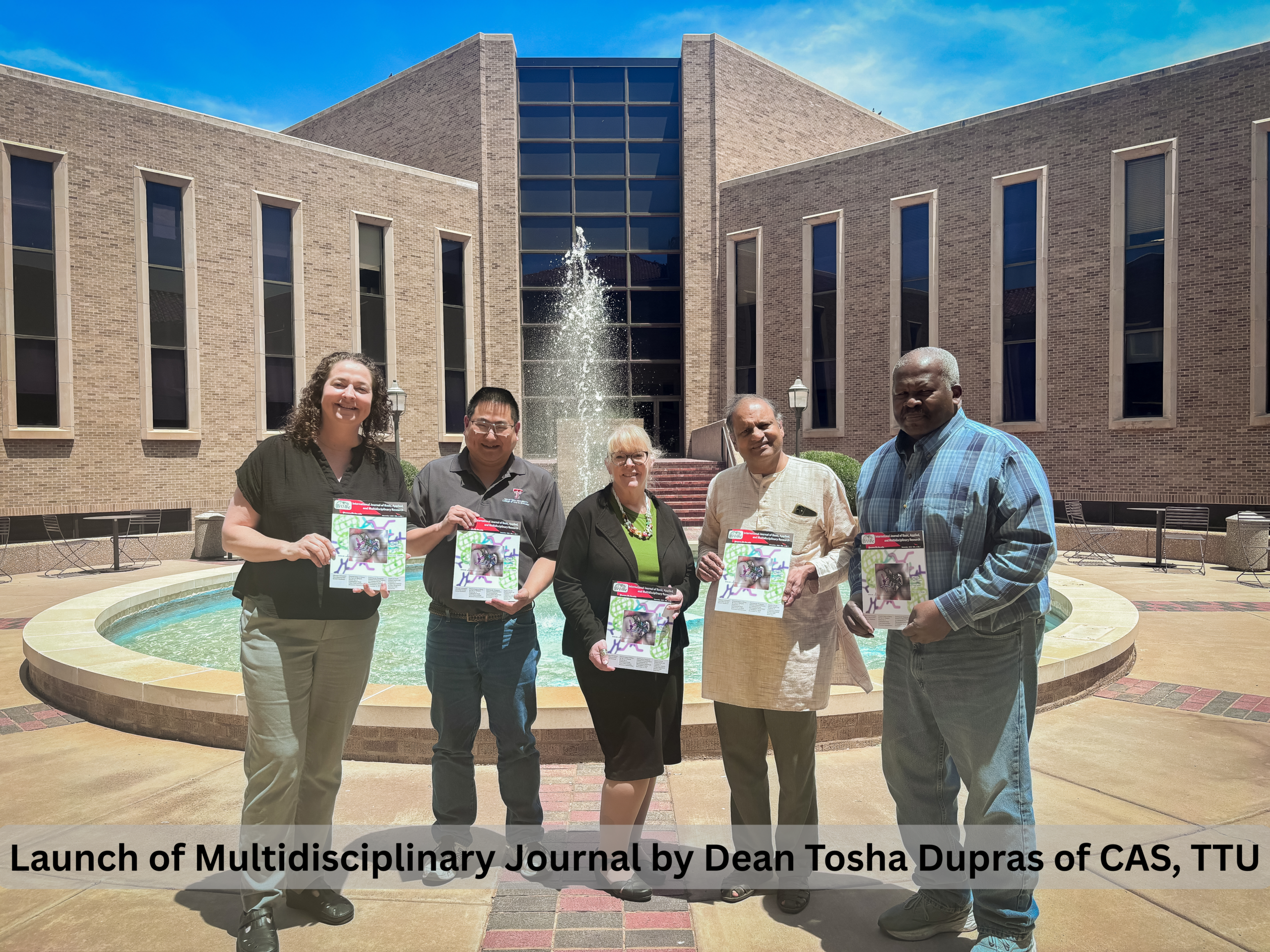
Having these needs in mind, Lubbock, USA-based Texas Tech University’s College of Arts & Sciences, has initiated two programs that are aimed at imparting research interest among undergraduates and publishing an open-source multidisciplinary journal. The unique aspect of this journal is that it is free for authors to publish as well as to readers. The college has developed a program, “CASURA,” that provides short term stipends for undergraduates to engage in laboratories throughout the year to carry out research. The Nonwovens & Advanced Materials Laboratory at TTU has recently engaged undergraduates in physics and biology to rope in multidisciplinary talents on developing sustainable products from cotton and other natural materials.
Efforts like CASURA can serve as models for industry and academia to impart research interest and communication skills. In an event hosted by the U.S. National Academy of Inventors, Professor Ishwar Aggarwal, a leading inventor with over 70 patents stressed the importance of communication, which is essential to obtain support from government agencies. This stresses the importance of not only scientific publication but also communication about modern technologies to the public. Since 2010, our laboratory has been involved in communicating scientific developments to the public through “TexSnips” newsletter.
As interest in manufacturing is growing in developed and developing countries, the next-generation workforce must be trained in research and vocational aspects from high school level. Effective communication skills must be imparted to undergraduates so that new developments can reach the public. “By engaging students in collaborative, interdisciplinary focused research, next-generation workforce who are equipped to address complex global challenges can be developed,” opined Dr. Ernest Smith.
Academia and industry must join hands in this collective effort to grow sectors that can provide jobs as well as impart advanced skill sets in burgeoning sectors.
About the author:
Dr Seshadri Ramkumar is a Professor, Nonwovens & Advanced Materials Laboratory in Texas Tech University, Lubbock, TX, USA.