


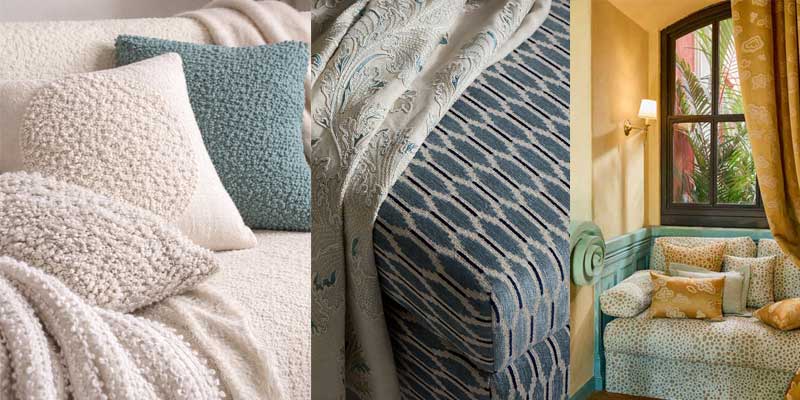
As design continues to move towards greater authenticity and human-centred living, texture will remain at the heart of this evolution, states Rohit Khemka.
For decades, luxury interiors were built around perfection. Highly polished marble, mirror-finished surfaces, flawless symmetry, and meticulously curated spaces became the visual markers of affluence. The objective was often clear: create interiors that impressed at first glance. Today, however, the definition of luxury is undergoing a profound transformation.
The world’s most desirable homes are no longer the most immaculate. They are the most evocative. Luxury is shifting from what we see to what we feel. This evolution has quietly elevated texture into one of the most important design elements in contemporary interiors. Across residences, hospitality projects, and bespoke living spaces, designers are increasingly using tactile materials to create environments that feel layered, comforting, and emotionally resonant.
The growing popularity of boucle, handwoven rugs, artisanal textiles, brushed linens, textured wall finishes, natural wood grains, and handcrafted surfaces is not merely an aesthetic trend. It reflects a deeper change in how people want to experience their homes. We have witnessed this shift firsthand.
Clients today rarely begin conversations by asking which colour is trending. Instead, they ask how a material feels, how it will age, how it responds to natural light, and whether it brings warmth into a space. The conversation has become less about decoration and more about experience.
Modern luxury is no longer defined by visual excess. It is defined by sensory richness. Perhaps the strongest driver behind this shift is the way we live today.
We spend much of our lives navigating digital environments. Screens dominate our workdays, social interactions, and entertainment. Information moves at an unprecedented pace, leaving little room for stillness.
As a result, our homes are being asked to perform a very different role than they did a decade ago. They are no longer simply places we return to. They have become sanctuaries where we seek restoration, balance, and emotional comfort.
Texture plays a critical role in creating that atmosphere. A handwoven carpet beneath bare feet. Linen drapery filtering the afternoon sun. The subtle irregularity of a handcrafted textile. These experiences engage the senses in ways that polished surfaces never can. They introduce softness into contemporary architecture and create a sense of intimacy within even the most minimal interiors.
Texture humanises space. This may explain why some of today’s most luxurious interiors appear remarkably restrained. Rather than relying on dramatic ornamentation or excessive layering, they derive their richness from carefully considered materials. A neutral room can feel infinitely more sophisticated when wool, linen, stone, timber, and handcrafted fabrics are layered thoughtfully together. The result is a space that feels calm yet visually compelling.
This approach represents a significant departure from the traditional understanding of luxury. For many years, luxury was associated with abundance. More materials, more embellishment, more visual impact.
Today’s luxury embraces a different philosophy. True luxury lies in depth, not display. Texture introduces nuance into interiors. It allows a room to reveal itself gradually rather than all at once. Light interacts differently with every surface throughout the day, creating subtle moments of visual interest that cannot be replicated through colour alone. This becomes particularly important in contemporary homes where neutral palettes dominate. In the absence of strong colours, texture becomes the language through which character, warmth, and personality are expressed.
Unlike trends that arrive and disappear with each season, texture possesses an enduring quality. Natural materials evolve beautifully over time. Linen softens. Wood develops a richer patina. Wool acquires character through use. These changes are not flaws to be corrected but qualities to be celebrated.
The most beautiful materials are often those that tell a story of time.
This appreciation for authenticity is also driving renewed interest in craftsmanship.
Across the design industry, there is a growing admiration for products that reveal the hand of the maker. Handwoven textiles, artisanal embroidery, textured weaves, and bespoke finishes carry a level of individuality that machine-made perfection often lacks. In a world increasingly defined by mass production and uniformity, people are seeking objects and materials that feel personal.
They want to understand where products come from, how they were created, and whose hands were involved in the process. Texture becomes the visible expression of that narrative.
Every irregular weave, every handcrafted detail, and every nuanced surface contributes to a richer, more meaningful interior experience. What makes this movement particularly fascinating is that it extends beyond aesthetics. It speaks to a larger cultural desire for connection, authenticity, and well-being.
People are no longer designing homes simply to impress guests or perform for social media. They are designing homes that support the way they want to feel calm, grounded, comfortable and connected. And often, it is texture that delivers those emotions most effectively. The most memorable spaces are rarely the loudest. They are the ones that create a lasting emotional impression long after you leave. A room does not need to announce its luxury. It only needs to make you feel it. That quiet emotional impact is becoming the defining characteristic of contemporary luxury.
As design continues to move towards greater authenticity and human-centred living, texture will remain at the heart of this evolution. Not because it is fashionable. But because it satisfies something fundamentally human.
In an increasingly digital world, texture reconnects us with the physical, the personal, and the real. And that, perhaps, is the ultimate luxury of our time.
About the author:
Rohit Khemka is the Founder of RR Décor. Known as a pioneer in bringing about a change in how people view and use Bhagalpur silks, Khemka has established a name for himself in the interior furnishing industry.