


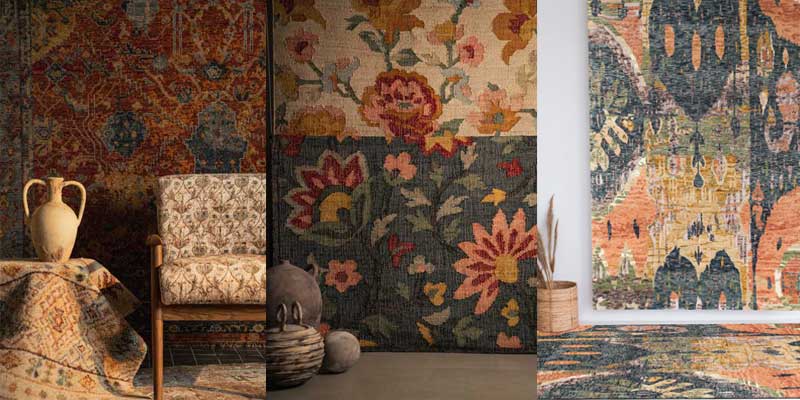
Future applications may include wall fabrics that regulate temperature, improve indoor environmental quality, respond to lighting conditions, or integrate seamlessly with building systems, explains Anushka Ahuja.
Walk into a thoughtfully designed home today and the walls tell a very different story. For years, interiors relied heavily on framed art, oversized canvases, gallery walls, and decorative objects to bring personality into a space. While these elements remain relevant, a new design language is emerging. One that is softer, more tactile, and far more immersive.
Wall textiles are moving beyond their traditional role as decorative accents and becoming an integral part of contemporary interiors. From handwoven tapestries and embroidered panels to large-scale textile installations and fabric artworks, designers are increasingly using textiles to introduce texture, warmth, and narrative into spaces.
More importantly, they are changing our relationship with walls altogether. Walls are no longer simply surfaces to decorate. They are becoming sensory experiences.
Life after the gallery wall
The gallery wall defined an entire era of interior design. Rows of carefully arranged frames, perfectly aligned compositions, and curated collections of prints became shorthand for personal style. Yet as interiors become increasingly individualistic, many designers are moving away from this formulaic approach.
Part of the reason is visual fatigue. Framed artwork often functions as a visual object viewed from a distance. Textile art, on the other hand, invites engagement. The eye naturally moves across its woven surfaces, layered fibres, stitched details, and subtle imperfections.
No two pieces are ever identical. Variations in weave, knotting, dye absorption, embroidery, and hand-finishing create individuality that cannot be reproduced mechanically. This uniqueness gives textile art an authenticity that resonates strongly with contemporary homeowners looking for spaces that feel personal rather than prescribed.
Unlike framed pieces protected behind glass, textiles maintain a direct relationship with their surroundings. They absorb light differently throughout the day, cast shadows, reveal texture, and develop character over time.
The wall becomes active rather than static.
Why texture is winning the room
One of the most significant shifts in contemporary interiors is the growing importance of texture. For decades, colour dominated design conversations. Today, texture has become equally influential in shaping the atmosphere. Designers are increasingly using tactile materials to create depth, especially in spaces where palettes remain restrained.
Wall textiles are a natural extension of this movement. A woven linen installation introduces softness without requiring colour. A large jute tapestry creates visual weight while maintaining simplicity. Embroidered panels add depth through stitchwork rather than pattern.
Texture creates a slower visual experience. Instead of delivering instant impact, it reveals itself gradually. The eye notices the irregular weave, the raised thread, the subtle movement within the fabric. These details create richness without clutter.
This is particularly valuable in contemporary homes where clients are seeking warmth without excess decoration. A textile wall piece can add depth equivalent to a collection of framed artworks while maintaining a far more cohesive visual language.
The antidote to concrete and glass
Contemporary architecture often celebrates hard materials. Stone, concrete, steel, glass, and polished surfaces create clean and sophisticated environments. Yet these materials can sometimes feel emotionally distant when used extensively.
Wall textiles introduce a necessary counterbalance. Natural fibres such as wool, linen, hemp, cotton, and silk soften the visual rigidity of architecture while preserving its integrity. Rather than competing with structural elements, textiles complement them.
A woven tapestry against exposed concrete creates tension between softness and solidity. An embroidered textile installation beside a stone wall introduces warmth without distracting from the architecture. A large handwoven panel can transform an expansive wall from feeling imposing to feeling welcoming.
This ability to humanise space is one of the reasons textile art is gaining such momentum among architects and interior designers. It introduces comfort without compromising sophistication.
Woven narratives
The most memorable interiors are rarely built around a single material or design gesture. They are layered environments that reveal stories over time. Textiles have always carried cultural and personal narratives. Whether through traditional weaving techniques, regional craftsmanship, natural dyeing methods, or contemporary artistic expression, fabric possesses an inherent storytelling quality.
This makes wall textiles particularly powerful. Unlike decorative accessories, they occupy significant visual real estate. They become focal points capable of communicating history, craftsmanship, travel, memory, and identity.
A handwoven textile from a specific region can reference local traditions. An abstract fibre installation can reflect an artist’s exploration of material and form. An embroidered wall panel may carry subtle cultural symbolism embedded within its motifs and construction. For homeowners, these pieces often become far more than decoration. They become personal artefacts that give spaces emotional depth. The room feels collected rather than styled.
What walls can hear
The growing popularity of wall textiles is not driven by aesthetics alone. Their functional benefits are equally compelling. As open-plan living continues to dominate residential design, acoustics have become a significant challenge. Hard surfaces such as marble, tile, glass, and timber flooring often create echo and sound reverberation.
Wall textiles help solve this problem naturally. Woven fibres absorb sound rather than reflecting it. Large textile installations can significantly soften acoustics within living rooms, dining spaces, libraries, home offices, and entertainment areas.
The difference is often immediately noticeable. Conversations feel clearer. Background noise is reduced. Spaces become calmer and more comfortable to inhabit. For designers, this creates an opportunity to combine performance with aesthetics. The textile functions as both artwork and acoustic treatment simultaneously. Few design elements offer that duality so elegantly.
The poetry of light and thread
Traditional framed artwork often struggles with changing light conditions. Glare from glass can obscure details. Reflections shift throughout the day. Certain pieces become difficult to appreciate depending on their placement.
Textiles behave differently. They absorb and interact with light rather than reflecting. Morning sunlight may emphasise woven patterns. Afternoon light can reveal raised embroidery. Evening shadows create entirely new dimensions across textured surfaces. This dynamic relationship with light gives textile art a living quality.
The artwork never appears exactly the same twice. As natural light moves through a home, the piece evolves with it, creating subtle moments of discovery throughout the day. This quality is particularly appealing in contemporary interiors where movement, atmosphere, and sensory experience are becoming increasingly important design considerations.
When walls begin to think
Perhaps one of the most intriguing developments is the intersection between textiles and technology. Researchers and manufacturers are exploring woven surfaces capable of integrating lighting, acoustic performance, climate responsiveness, and smart-home functionality.
Textiles are beginning to move beyond decoration and into architecture itself. Future applications may include wall fabrics that regulate temperature, improve indoor environmental quality, respond to lighting conditions, or integrate seamlessly with building systems.
While many of these innovations remain in their early stages, they signal an exciting direction for material design. The future wall may not simply display art. It may actively contribute to how a space performs.
About the author:
Anushka Ahuja is the Co-founder of Studio by Agni. Studio by Agni is where emotion converges with design, and tradition seamlessly merges with innovation. They specialize in crafting handcrafted carpets that effortlessly marry artisanal charm with modern design. Each carpet becomes a unique narrative, meticulously woven with love, resulting in an authentic masterpiece.