


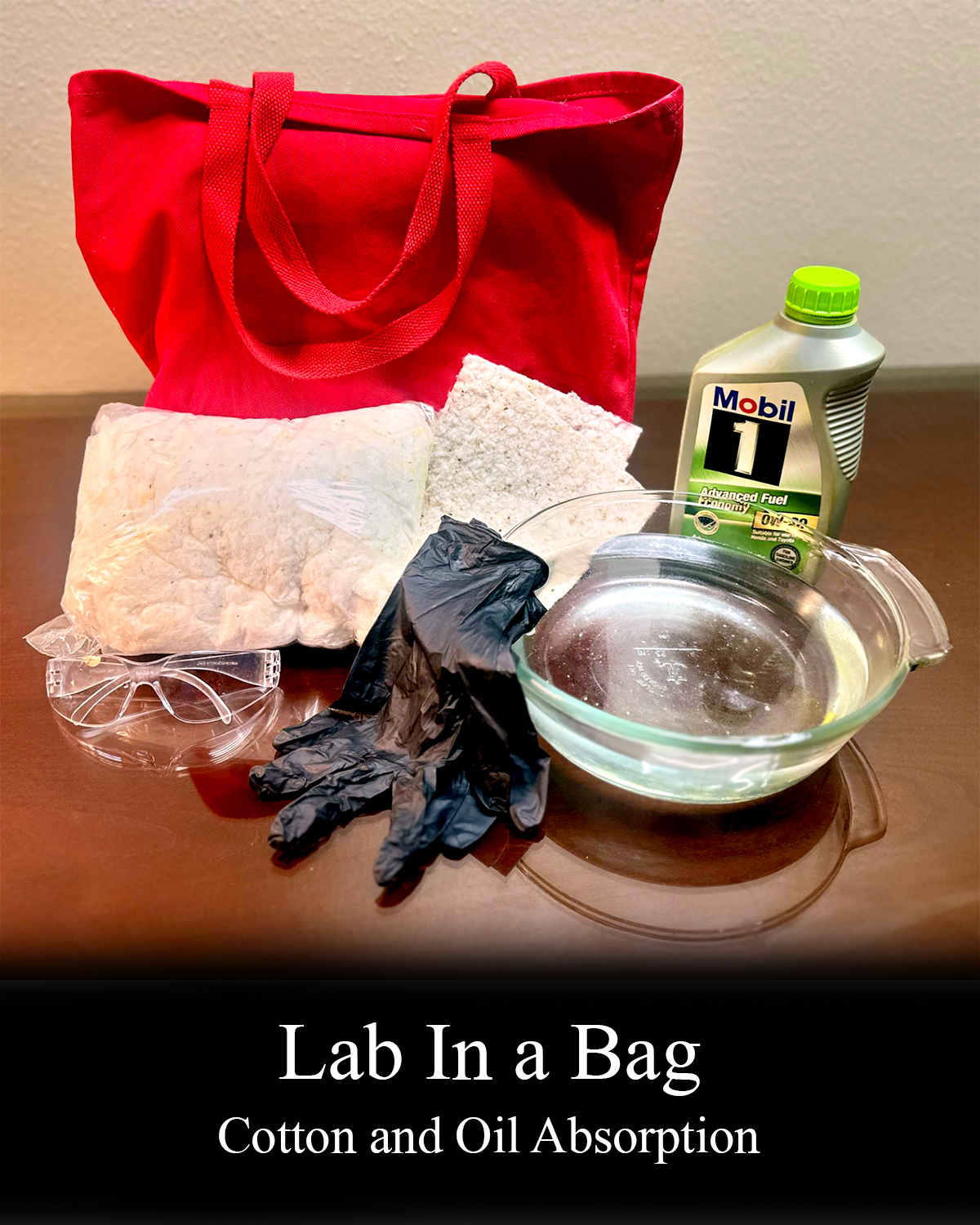
Prof Seshadri Ramkumar informs, Lab in a Bag set-up consists of a packet of cotton, cotton nonwoven samples, oil absorption set-up, experimental oil, and safety equipment.
Engaging with customers, community, and next-generation is important to promote sustainability and new values.
On April 17, 2024, as part of the 6th annual Engaged Scholarship Symposium organised by Texas Tech University, sustainability aspects of cotton and advanced applications were showcased using a mobile laboratory, termed as “Lab in a Bag.â€
I had an opportunity to present our engaged research with High Plains’ cotton producers, “Engaged Research in National Defence, Human Health, and Environmental Protection,†that focuses on finding new applications for cotton, developing alternatives to plastics, and exploring opportunities for cotton in defense and industrial sectors.
The symposium highlighted various aspects of engagement such as using theatre plays to simulate disaster days, pictorial representation of a situation, etc. The power of effective engagement with stakeholders was stressed in the event. Presentations involved researchers from arts, engineering, family science and English all focusing on outreach and engagement.
Our work featured a mobile laboratory using a “Lab in Bag,†that has materials to highlight the earth friendliness of natural materials like cotton. The way the mobile laboratory can be put together with ease attracted the attention of the audience in the meeting. Such a makeshift laboratory can be used by different industries to highlight their uniqueness.
Lab in a Bag set-up consists of a packet of cotton, cotton nonwoven samples, oil absorption set-up, experimental oil, and safety equipment. This set-up can be quickly assembled and can be used to demonstrate new applications of cotton such as oil absorption to school students, consumers, and for promoting the product.
People in the audience such as those belonging to the education sector enquired about sustainability approaches followed in the cotton sector. Practical demonstrations enhance awareness and interest in sustainable products. In the case of oil absorption by raw cotton, “Lab in a Bag,†projects the scientific mechanism to the audience as well as how such products are biodegradable. Show and tell engages well with the audience and can serve as great advertisement tools.
It was clear that people are aware of microplastic pollution, and the industry must involve in aggressive engagement with the society to highlight the positiveness of cotton such as the development of value-added products, biodegradability, and providing livelihood to many farmers in developing nations such as those in Africa.
It is becoming clear that better messaging and reaching out to practitioners in other disciplines such as theatre, music, and art can produce positive campaigns to relay facts about cotton and other natural products.
About the author:
Dr Seshadri Ramkumar is a Professor, Nonwovens & Advanced Materials Laboratory in Texas Tech University, Lubbock, TX, USA.