Close Menu
Indian Textile Journal
  • Home
  • Textile Machinery
    • Allied Equipment and Accessories
    • Automation
    • Dyeing, Processing & Finishing
    • Knitting
    • Printing
    • Spinning
    • Weaving
  • Tech Textiles
  • Sustainability
  • Resources
    • Trade Fair
    • Events
    • Videos
  • Interview & Opinion
  • Subscribe Now
  • Advertise
  • Digital
  • Apparels & Garments
  • Fibres & Raw Materials
  • Home Textiles
  • Industry Update
Facebook X (Twitter) YouTube LinkedIn
Indian Textile Journal
Epson
  • Home
  • Textile Machinery
    • Allied Equipment and Accessories
    • Automation
    • Dyeing, Processing & Finishing
    • Knitting
    • Printing
    • Spinning
    • Weaving
  • Tech Textiles
  • Sustainability
  • Resources
    • Trade Fair
    • Events
    • Videos
  • Interview & Opinion
  • Subscribe Now
  • Advertise
  • Digital
  • Apparels & Garments
  • Fibres & Raw Materials
  • Home Textiles
  • Industry Update
Indian Textile Journal
Home » Raw material saving in blowroom & carding
Spinning

Raw material saving in blowroom & carding

By October 1, 20163 Mins Read
Share Facebook Twitter LinkedIn WhatsApp Copy Link

The most important factor in the area of blowroom and cards is the raw material. A saving of 1% good fibres shows considerable effects, writes Simon Urrutia.

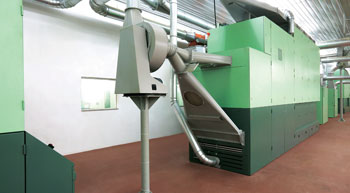
At a customer in southern India, the rare opportunity presented itself to carry out a direct comparison of the blowroom and card waste. Running parallel there are a Rieter blowroom and carding section as well as a preparation line from another manufacturer, each with practically the same year of construction and almost the same production rate. With this comparison, card production was in focus. The aim was a 75 per cent higher performance of the C 70 card with qualitively equal yarn.

Framework conditions

The test was based on a blend of various Indian cottons with a trash content of 3 per cent. The card sliver produced by both lines was spun on the same downstream machines – draw frames, roving frames and ring spinning machines – to a carded knitting yarn of Ne 30 count.

Significant results:

The results are impressive. The Rieter line with VARIOline and C 70 cards achieved the following values compared to the other manufacturer:

  • 75 per cent higher production of the card
  • equal sliver and yarn quality (the values are within the fluctuation rate usual in the spinning mill)
  • 27 per cent energy saving
  • 1 per cent waste saving.

How are these excellent results achieved?

The Rieter fibre preparation guarantees gentle opening, efficient cleaning and intensive mixing of the fibres at highest production, based on the following features:

  • microtufts for efficient cleaning
  • progressive cleaning in several stages
  • bypass option of the clearer module according to fibre material
  • VARIOset for easy adjustment of the setting during operation.

An outstanding feature of the C 70 card is the largest active carding area for high performance with excellent quality. The efficient cleaning at high production is achieved by selective trash elimination at various points:

  • on the licker-in
  • in the pre- and post-carding zones
  • by the continuously adjustable flats speed.

Effective savings

In this particular case, the Rieter line with blowroom and card with the lower energy requirement achieves yearly savings of around $32,500 at a line production of 1,000 kg/h and an electricity rate of 10 US cents per kWh.

The 1 per cent waste resp. raw material savings with a line production of 1,000 kg/h and a cotton price of $1.48 per kilogram result in a yearly saving of around $1,20,000.

The article is authored by Simon Urrutia, Head – Product Management Blowroom, Card at Rieter. He can be contacted at: simon.urrutia@rieter.com

Previous ArticleMarzoli’s YarNet covers entire production process
Next Article New Wira Fibre Diagram Machine FDM2

Related Posts

How Trützschler’s CL-X is revolutionising cotton ginning and preparation

August 3, 2026

Rieter’s COMPACT4 – A New Universal Solution for Compact Spinning

July 24, 2026

Rieter transforms with major man-made fibre acquisition

July 17, 2026
Recent Posts
  • CMAI and partners launch nationwide Independence Day garment drive to boost circular fashion
  • Wazir Advisors, BKMEA, and BRAC University’s CED launch the inaugural Bangladesh’s Global Apparel Trade Update
  • Karl Mayer provides the warp preparation technology driving the AI boom
  • Denim Show to drives business growth for the garment and textile manufacturing value chain
  • GHCL Textiles Q1 FY27 PAT jumps 191% to Rs 390 mn
  • Applications now open for the next global cycle of the International Woolmark Prize
  • Heimtextil expands bed, bath & living portfolio with ‘Comfort & Connect’ launch
  • VisionSpring intervention boosts garment worker productivity by 6%, study shows
Facebook X (Twitter) YouTube LinkedIn
  • About us
  • Contact us
  • Privacy Policy
  • Terms and Conditions

SISTER PUBLICATIONS

Construction World Equipment India Industrial Product Finder Infrastructure Today

© 2026 Indian Textile Journal. All Rights Reserved.

Type above and press Enter to search. Press Esc to cancel.