Close Menu
Indian Textile Journal
  • Home
  • Textile Machinery
    • Allied Equipment and Accessories
    • Automation
    • Dyeing, Processing & Finishing
    • Knitting
    • Printing
    • Spinning
    • Weaving
  • Tech Textiles
  • Sustainability
  • Resources
    • Trade Fair
    • Events
    • Videos
  • Interview & Opinion
  • Subscribe Now
  • Advertise
  • Digital
  • Apparels & Garments
  • Fibres & Raw Materials
  • Home Textiles
  • Industry Update
Facebook X (Twitter) YouTube LinkedIn
Indian Textile Journal
Epson
  • Home
  • Textile Machinery
    • Allied Equipment and Accessories
    • Automation
    • Dyeing, Processing & Finishing
    • Knitting
    • Printing
    • Spinning
    • Weaving
  • Tech Textiles
  • Sustainability
  • Resources
    • Trade Fair
    • Events
    • Videos
  • Interview & Opinion
  • Subscribe Now
  • Advertise
  • Digital
  • Apparels & Garments
  • Fibres & Raw Materials
  • Home Textiles
  • Industry Update
Indian Textile Journal
Home » Recycled fibreboard & pulp to generate power
Industry Update

Recycled fibreboard & pulp to generate power

By November 4, 20161 Min Read
Share Facebook Twitter LinkedIn WhatsApp Copy Link
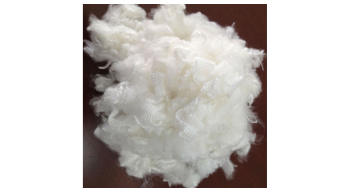
Recycled cardboard fibres and pulp, when developed into triboelectric generators can produce electricity. Researchers at the University of Wisconsin-Madison are advancing the field of “roadside energy harvesting” by getting help from recycled paper boards and pulp based cellulose nanofibres.
Integrated triboelectric fibreboards were developed using cellulose nanofibres triboelectric generator embedded in fibreboards developed using recycled paper boards, using cold press method. Triboelectric phenomenon is similar to the production of static charges on textiles. Cellulose nanofibres were produced using commercially available bleached eucalyptus pulp.
Dr. Xudong Wang of the Department of Materials Science and Engineering at the University of Wisconsin-Madison collaborated with USDA’s Forest Products Laboratory, Madison in developing the electricity generator. The team demonstrated that electric power necessary to charge up to 35 green LEDS, can be generated when a person stepped on to the fibreboard, as if walking. The mechanical energy is then converted into electrical energy.
By: Seshadri Ramkumar, Texas Tech University, USA
Previous ArticleKnit Concern invests in Brückner dryer
Next Article Cotton crop on the rise amid shrinking acreage

Related Posts

CAI raises India cotton pressing estimate to 339 lakh bales

August 12, 2026

Birla Cellulose handloom initiative opens new avenues for traditional weavers

August 11, 2026

NABARD celebrates National Handloom Day with Mumbai Exhibition and Sales

August 11, 2026
Recent Posts
  • CAI raises India cotton pressing estimate to 339 lakh bales
  • Birla Cellulose handloom initiative opens new avenues for traditional weavers
  • NABARD celebrates National Handloom Day with Mumbai Exhibition and Sales
  • Global textile sector responds enthusiastically to ITMA 2027
  • Peter England enters Gen Z fashion with new sub-brand VYBE
  • PDS Q1 FY27 revenue rises 15%, PAT jumps 43%
  • Gartex Texprocess India in Delhi showcases cutting-edge garment tech
  • KKCL Q1 FY27 revenue rises 19%, PAT grows 29%
Facebook X (Twitter) YouTube LinkedIn
  • About us
  • Contact us
  • Privacy Policy
  • Terms and Conditions

SISTER PUBLICATIONS

Construction World Equipment India Industrial Product Finder Infrastructure Today

© 2026 Indian Textile Journal. All Rights Reserved.

Type above and press Enter to search. Press Esc to cancel.