


Looms can weave a wide variety of technical textiles, including fabrics used in applications like construction, automotive, medical, and industrial sectors.
The Seminar was started with a Welcome Speech by D P Mangal, President, MCCI.
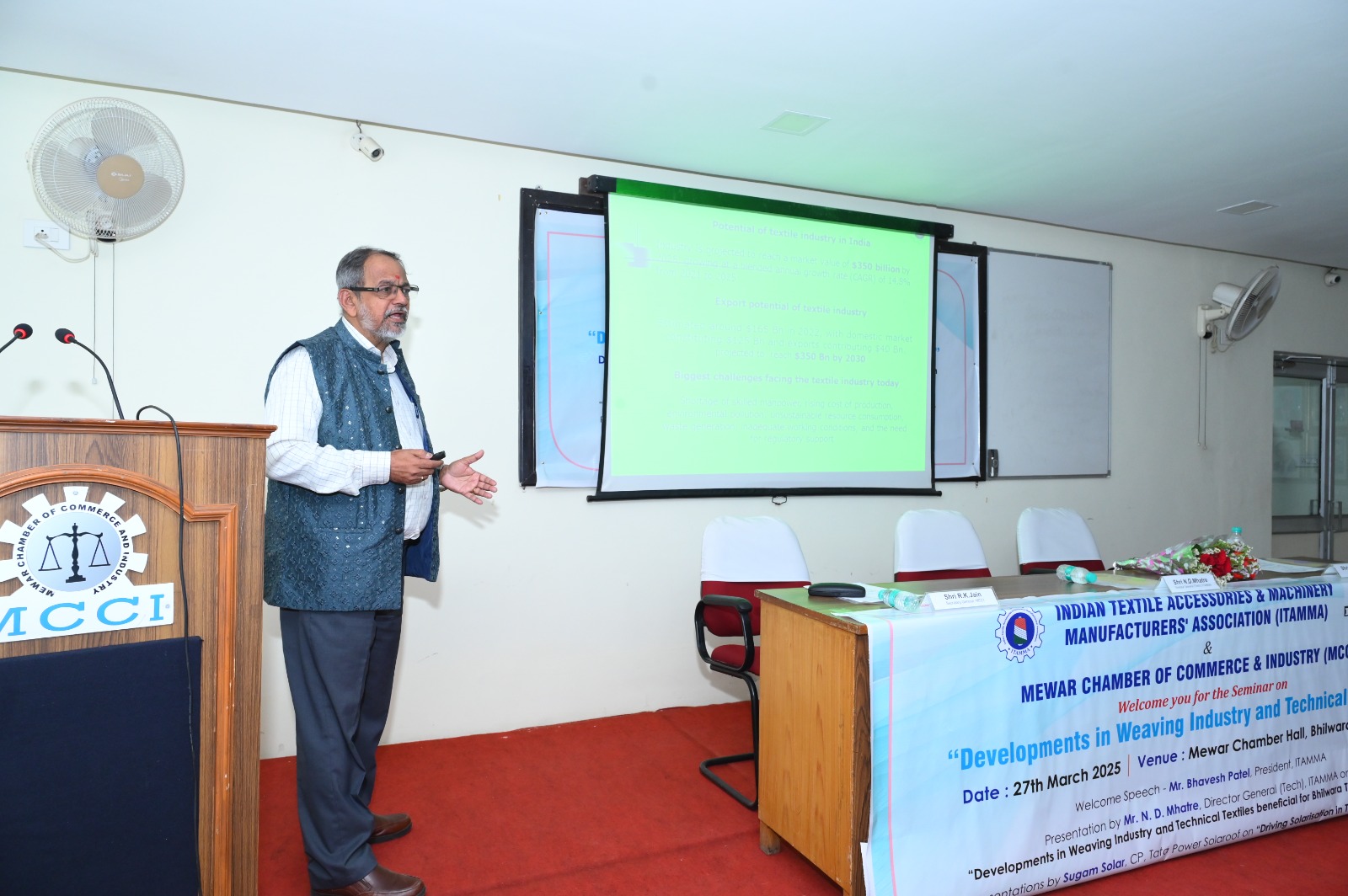
Thereafter N D Mhatre, Director General (Tech), ITAMMA while making his power point presentations mentioned about the opportunities on Looms for the manufacturing of Technical Textiles as below:
Looms can weave a wide variety of technical textiles, including fabrics used in applications like construction, automotive, medical, and industrial sectors. Which include materials like glass, aramid, carbon fibres, and specialised weaves like Leno fabric, as well as fabrics for filtration, insulation, and composite reinforcement. Types of technical textiles that can be woven on looms are construction textiles (buildtech), geotextiles- Used for soil reinforcement, drainage, and erosion control. Reinforcing fabrics for composites, used in construction materials like concrete and plastics.
Automotive Textiles (mobiltech)- Durable and comfortable materials for car seats. Interior trim- Fabrics for dashboards, door panels, and other interior components. Medical textiles (meditech/medtex) – Surgical textiles like woven fabrics for bandages, sutures, and other medical applications, in the creation of medical implants.
Industrial Textiles (Indutech) – PP filter fabrics, used in industrial filtration processes, industrial belts and tapes-Used in conveyor systems and other industrial machinery. Protective clothing- fabrics for fire protection, chemical protection, and other hazardous environments. Ceramic insulation fabrics, used for high-temperature applications. Agro-textiles- fabrics for crop protection, weed control, and other agricultural applications.
Leno fabrics, used for specialised applications like insect nets and filter fabrics. Glass, aramid, and carbon fibre fabrics, used in high-strength materials for various applications.
A wide range of yarn types can be used in weaving technical textiles, including natural fibres, synthetic fibres, and high-performance fibres.
For weaving technical textiles, looms require wider sheds, which can be achieved by modifying the loom’s shedding mechanism to lift more warp threads simultaneously. Looms need to be able to hold the warp threads under higher tension, which can be achieved by improving the warp beam and tensioning mechanisms. Specialised loom components, like reed may need to be modified to accommodate wider or more complex fabric. And heddle frames, need to be modified to handle the specific requirements of technical textiles.
Braid mat weaving machine, weave braid mats while paper mill clothing weaving machine, used for weaving paper mill clothing.
12 MTR Wide Tubular Fabrics Weaving Machine, used for weaving wide tubular fabrics. Needle Lines, used for producing needle-felted fabrics, while Thermo-Bonding Lines are used for bonding fabrics with heat.
Coating and Finishing Lines, used for applying coatings and finishes to fabrics.
Mhatre also explained about the utilisation of Plasma Technology for repairing the grooved Rapier Heads, IIOT applications in Weaving machines, sturdy and high resolution encoders, sound proof guards, use of LED in exact location of warp break on loom, automatic loom inspection system, labelling system on grey fabric for piece tracking through all textile process, vibration sensors, ceramic cutters, electronically controlled cooling system on loom and motor, technology displayed at ITMA of producing garment on the loom, powder brakes, integrated lubrication system, 3D model of a wide loom using mixed-reality technology, encapsulated weaving machine for car upholstery fabric, needle-less tucking –in device, technology to minimise RHS selvedge waste, on-loom automatic fabric inspection system, etc.
Some modifications on the loom itself in cloth take-up system for lamination/coating process and attachments of having heavy duty Creel for high specialised yarns, based on cutting-edge technologies were informed. There was a very good response from the stakeholder participants whereby many have come forward and shown interest to go for manufacturing of Technical Textiles very shortly, during the interactive session.
The Seminar concluded with the vote of thanks by R K Jain, Hon’ Secretary General, MCCI who informed that very shortly a One day Conference will be organised focused on specific product/s of technical textiles which can be manufactured in the Bhilwara Textile Industry with the present set-up or some minor modifications/attachments.