


After a sluggish market in China, Turkey, India, and the Unites States, Italian textile machinery witnesses some positive signals emerged in the first quarter.
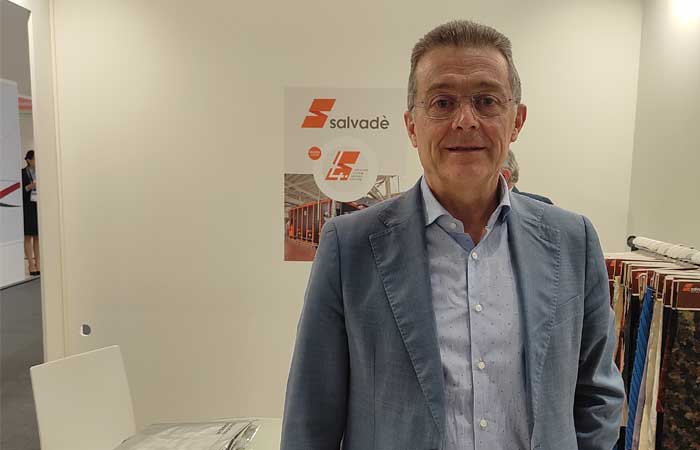
Maintaining a focus on innovation despite the uncertainties that characterise the current international scenario was emphasised during the General Assembly of ACIMIT, the Italian Textile Machinery Manufacturers Association, held in Milan. Marco Salvadè, President, ACIMIT, showcased the data of the Italian textile machinery industry. In 2023, production decreased by 16 per cent, settling at a value of € 2.3 billion, as did exports, which also fell by 16 per cent (€ 2 billion).
China, Turkey, India, and the United States remain the main destinations for Italian textile machinery manufacturers. In 2023, demand for machinery in these markets was weak, but some positive signals emerged in the first quarter of the current year, especially from the Chinese market and again from Egypt, Pakistan, Brazil, and Japan. “2024 will still be a year characterised by many uncertainties,†commented Salvadè, “mainly due to the uncertainty of the geopolitical situation and fluctuations in final demandâ€.
In an especially difficult international scenario and with a still sluggish market, the Italian textile machinery sector remains a leader alongside a few other Countries, such as China, Germany, and Japan. “Our sector is renowned worldwide for its reliability, know-how, and the uniquely Italian ability to combine tradition and innovation,†noted Salvadè. Accelerating innovation remains crucial, particularly to meet the challenges that await Italian manufacturers in supporting textile companies on their sustainable transition journey.
To highlight the opportunities that the European green transition opens up for technology suppliers, the public section of the ACIMIT General Assembly addressed a very current issue: textile recycling. The EU’s legislative guidelines aim to accelerate the green and circular transition of the textile sector with various actions: from ecodesign to EPR, from waste export regulation to green claims. Meanwhile, there is a growing demand for recycled textile fibres driven by the sustainable policies of brands that should not be underestimated.
Thus, technologies play an important role in providing solutions to companies engaged in the new circularity supply chain: from sorting and selection of garments to preparation phases and recycling processes. During the event several speakers agreed that the experience and capabilities of the Italian textile and textile machinery sector should be fully leveraged at this crucial stage for the entire supply chain. As Salvadè noted, “Textile machinery companies intend to increase R&D activities in this area, collaborating with their textile customers in the belief that the circular transformation of business models also represents an opportunity for technology suppliers to increase their competitiveness.â€
Association of Italian Textile Machinery Manufacturers (ACIMIT) represents an industrial sector that comprises roughly 300 manufacturers, which produce machinery for an overall worth of around € 2.3 billion, of which 86 per cent are exported. Creativity, sustainable technology, reliability and quality are the hallmarks that have made Italian textile machinery worldwide leaders.