Close Menu
Indian Textile Journal
  • Home
  • Market and Economy
    • Apparels & Garments
    • Fibres & Raw Materials
    • Home Textiles
    • Industry Update
  • Textile Machinery
    • Allied Equipment and Accessories
    • Automation
    • Dyeing, Processing & Finishing
    • Knitting
    • Printing
    • Spinning
    • Weaving
  • Tech Textiles
  • Sustainability
  • Resources
    • Trade Fair
    • Events
    • Videos
  • Interview & Opinion
  • Subscribe Now
  • Advertise
  • Digital
Facebook X (Twitter) YouTube LinkedIn
Indian Textile Journal
Epson
  • Home
  • Market and Economy
    • Apparels & Garments
    • Fibres & Raw Materials
    • Home Textiles
    • Industry Update
  • Textile Machinery
    • Allied Equipment and Accessories
    • Automation
    • Dyeing, Processing & Finishing
    • Knitting
    • Printing
    • Spinning
    • Weaving
  • Tech Textiles
  • Sustainability
  • Resources
    • Trade Fair
    • Events
    • Videos
  • Interview & Opinion
  • Subscribe Now
  • Advertise
  • Digital
Indian Textile Journal
Home » Hong Kong’s new fight against fast fashion
Industry Update

Hong Kong’s new fight against fast fashion

By October 5, 20182 Mins Read
Share Facebook Twitter LinkedIn WhatsApp Copy Link
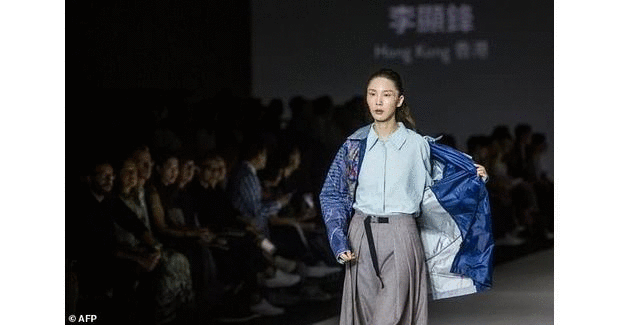
Despite Hong Kong’s reputation for rampant consumerism, a nascent movement against fast fashion is taking root in the city, with clothes-mending workshops and pop-up swaps growing in popularity, and designers parading recycled fabrics on the catwalk. From broken umbrellas to discarded curtains, no material is too shabby for designer Jesse Lee, who showcased his creations at a recent sustainable fashion show in Hong Kong. Lee realised that humble household goods could be the springboard for creativity when his family was throwing out an old sofa. He turned the sofa’s leather cover into a jacket and has since made clothes from old curtains and bed linen, as well as a raincoat using umbrella fabric. Lee also tries to make his designs unisex and adjustable so they can be easily shared. 
A model showing a jacket made with materials from discarded umbrellas. "If you don’t feel like wearing this, you can give it to others and it doesn’t matter if it is a boy or a girl," Lee said. Global consumers purchased 60 per cent more clothing in 2016 than in 2000 and only kept each item half as long, a report by McKinsey consultancy found. Hong Kong alone sends 343 tonnes of textiles to the city’s overloaded landfills every day and a 2016 report by Greenpeace found a sixth of clothes owned by residents were seldom or never worn after purchase. 
But Lee and others like him are hoping to capitalise on rising consumer awareness as shoppers become more conscious of the human and environmental cost of fast fashion after high-profile scandals like the deadly 2013 collapse of a building in Bangladesh that housed several garment factories. The tragedy, one of the worst industrial accidents in modern history, sparked global outrage and triggered a drive among activists to encourage shoppers to buy from local stores, rather than from large multinational fast fashion brands. 
Christina Dean, founder of Redress, says the tide is slowly turning and describes the industry as at a tipping point. The Hong Kong-based charity works to reduce fashion waste and hosted the recent show where Lee displayed his creations, alongside other designers who transformed vintage kimonos and bridalwear samples and even used silicone and rubber. "Many people are turning their backs and saying ‘I have more clothes than I can possibly wear," she said.
Previous ArticleFashion & nature forging new harmony
Next Article Role of standards for value chain sustainability

Related Posts

India’s textile sector posts 2.1% growth in FY25-26

June 15, 2026

RSWM retains IND A rating as outlook turns stable

June 12, 2026

Meenakshi India reports FY26 revenue at Rs 1.58 billion

June 9, 2026
Recent Posts
  • Nesterra unveils new collection showcasing timeless luxury and craftsmanship
  • India’s textile sector posts 2.1% growth in FY25-26
  • RSWM retains IND A rating as outlook turns stable
  • Mumbai welcomes back HGH India 2026
  • Vipul Organics teams up with OMYA for European pigment distribution
  • ITM Istanbul 2026: ColorJet’s visibility extends across the entire exhibition
  • CMAI kidswear fair sees record participation 
  • Clean energy shift may save Tamil Nadu textiles Rs 32.50 billion
Facebook X (Twitter) YouTube LinkedIn
  • About us
  • Contact us
  • Privacy Policy
  • Terms and Conditions

SISTER PUBLICATIONS

Construction World Equipment India Industrial Product Finder Infrastructure Today

© 2026 Indian Textile Journal. All Rights Reserved.

Type above and press Enter to search. Press Esc to cancel.