Close Menu
Indian Textile Journal
  • Home
  • Textile Machinery
    • Allied Equipment and Accessories
    • Automation
    • Dyeing, Processing & Finishing
    • Knitting
    • Printing
    • Spinning
    • Weaving
  • Tech Textiles
  • Sustainability
  • Resources
    • Trade Fair
    • Events
    • Videos
  • Interview & Opinion
  • Subscribe Now
  • Advertise
  • Digital
  • Apparels & Garments
  • Fibres & Raw Materials
  • Home Textiles
  • Industry Update
Facebook X (Twitter) YouTube LinkedIn
Indian Textile Journal
Epson
  • Home
  • Textile Machinery
    • Allied Equipment and Accessories
    • Automation
    • Dyeing, Processing & Finishing
    • Knitting
    • Printing
    • Spinning
    • Weaving
  • Tech Textiles
  • Sustainability
  • Resources
    • Trade Fair
    • Events
    • Videos
  • Interview & Opinion
  • Subscribe Now
  • Advertise
  • Digital
  • Apparels & Garments
  • Fibres & Raw Materials
  • Home Textiles
  • Industry Update
Indian Textile Journal
Home » Hohenstein launches series of 4D scanning projects
Industry Update

Hohenstein launches series of 4D scanning projects

By October 18, 20191 Min Read
Share Facebook Twitter LinkedIn WhatsApp Copy Link

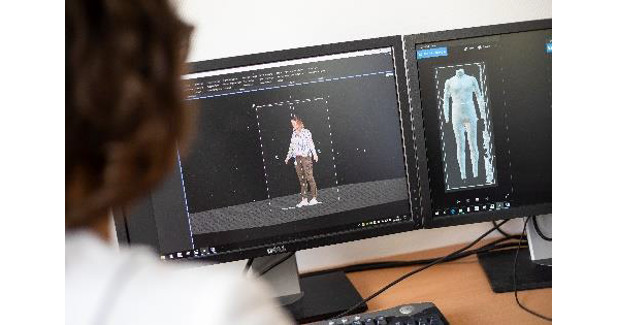
Hohenstein’s new 4D body scanner will be used in a series of research projects. Each project aims to advance knowledge and processes throughout the apparel industry. One such project, “Mobility Restrictions,” is funded by the German Federation of Industrial Research Associations (AiF). Scheduled to complete in October 2020, it will focus on body measurement changes during movement. The aim of the Hohenstein scientists is to develop a standard method of analysing how a clothing item restricts movement.


Scanning in 4D shows body shape and size for the intended customer, and thus reveals the changes in body shape during relevant motions. It shows both the impact of movement on the garment and the garment’s impact on movement. Range of motion, particularly in sportswear and workwear, can be analysed for improved function.


The 4D data with 3D visualisation shortens or eliminates prototyping time and cost. It creates better data for size chart creation and pattern making. Better patterns lead to less material and product waste. Realistic size data leads to better fitting garments. Improving fit, function and ergonomic comfort affects return rates, brand loyalty and profits.

Previous ArticleGlobal yarn output up 17%
Next Article Importance of innovation stressed at SDC EC meet

Related Posts

Sonaselection India raises Rs 420.47 million from 3 anchor investors at Rs 99/share

September 17, 2026

Obituary: Dr. Chidambaram Bose – A visionary leader and pillar of TAI Mumbai Unit

September 15, 2026

Sonaselection India Limited IPO opens Sept 17 at Rs 94-99

September 10, 2026
Recent Posts
  • Style Baazar recently hosted a fashion show to unveil its festive collection
  • Myntra launches Italian brand Sisley in India
  • Jeanologia demonstrates how sustainability and profitability go hand in hand
  • Bureau of Indian Standards initiative enhances nationwide cotton fibre testing infrastructure
  • New Red-Ox-Free Discharge Printing Technology receives Indian patent
  • ALLIED Feather + Down adds audited carbon footprint data to its TrackMyDown platform
  • Sonaselection India raises Rs 420.47 million from 3 anchor investors at Rs 99/share
  • Santosh Katariya: Introducing MDR on UPI at the start of festive season is very challenging
Facebook X (Twitter) YouTube LinkedIn
  • About us
  • Contact us
  • Privacy Policy
  • Terms and Conditions

SISTER PUBLICATIONS

Construction World Equipment India Industrial Product Finder Infrastructure Today

© 2026 Indian Textile Journal. All Rights Reserved.

Type above and press Enter to search. Press Esc to cancel.