Close Menu
Indian Textile Journal
  • Home
  • Market and Economy
    • Apparels & Garments
    • Fibres & Raw Materials
    • Home Textiles
    • Industry Update
  • Textile Machinery
    • Allied Equipment and Accessories
    • Automation
    • Dyeing, Processing & Finishing
    • Knitting
    • Printing
    • Spinning
    • Weaving
  • Tech Textiles
  • Sustainability
  • Resources
    • Trade Fair
    • Events
    • Videos
  • Interview & Opinion
  • Subscribe Now
  • Advertise
  • Digital
Facebook X (Twitter) YouTube LinkedIn
Indian Textile Journal
Epson
  • Home
  • Market and Economy
    • Apparels & Garments
    • Fibres & Raw Materials
    • Home Textiles
    • Industry Update
  • Textile Machinery
    • Allied Equipment and Accessories
    • Automation
    • Dyeing, Processing & Finishing
    • Knitting
    • Printing
    • Spinning
    • Weaving
  • Tech Textiles
  • Sustainability
  • Resources
    • Trade Fair
    • Events
    • Videos
  • Interview & Opinion
  • Subscribe Now
  • Advertise
  • Digital
Indian Textile Journal
Home » Dibella support for organic farmers
Industry Update

Dibella support for organic farmers

By July 22, 20192 Mins Read
Share Facebook Twitter LinkedIn WhatsApp Copy Link
With its range of hotel linen made from GOTS and Fairtrade certified organic cotton, Dibella is committed to the ecologically and socially responsible development of textile production in cotton-growing countries. In addition, the company is directly supporting farmers in India. Thus, it is actively helping cotton smallholders in Adilabad to overcome the challenges that they face. Currently, Dibella is providing upfront finance for the procurement of genetically unmodified seeds for high-quality organic cotton.
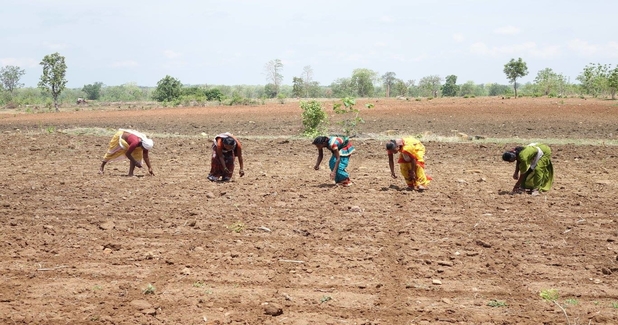
The onset of the monsoon season (June to September) marks the commencement of the cotton-farming year in India. Smallholders in the Adilabad cooperative, which grows organic cotton for the sustainably produced Dibella+ range, are tilling the soil to prepare for sowing. Under the organic farming rules they are required to plant genetically unmodified seeds. However, small family farms find it extremely difficult to procure these seeds as the market is dominated by genetically modified (GMO) product. In an effort to protect and secure the livelihoods of these farming families, 
Dibella is providing the cooperative with Euro 25,000 to purchase tested, GMO-free seeds for growing environment-friendly organic cotton.
India is the world’s largest producer of conventional and organic cotton. The plants are cultivated free of any pesticides, while irrigation almost exclusively takes the form of natural precipitation. Given the high proportion of genetically modified plants, which according to Forum Bio- und Gentechnologie (Transgen, Aachen) accounted for 93 per cent in 2016, unmodified seeds are difficult to obtain.
Dibella is pursuing multiple goals by providing upfront finance for GMO-free seeds. For one thing, the families gain faster and more reliable access to the unmodified seeds, which in turn ensures them of a viable livelihood. For another, the company can cover its own steadily increasing demand for sustainably grown high-quality organic cotton for the Dibella+ range.
To ensure that the GMO-free seeds meet the high GOTS and Fairtrade requirements, they are checked again for purity after being purchased by the cooperative. This ensures that any contamination can be eliminated at an early stage.
Previous ArticleEmbee signs major agreements at ITMA
Next Article Archroma’s formaldehyde-free low temp curing binder

Related Posts

Meenakshi India reports FY26 revenue at Rs 1.58 billion

June 9, 2026

Training undergraduate and school students in textiles research

June 9, 2026

PDS earns Great Place to Work recognition in 10 countries

June 2, 2026
Recent Posts
  • Clean energy shift may save Tamil Nadu textiles Rs 32.50 billion
  • Spykar plans pan-India offline expansion with 100 new stores in two years
  • Meenakshi India reports FY26 revenue at Rs 1.58 billion
  • Grasim Industries to invest Rs 30.94 billion to boost lyocell capacity
  • Training undergraduate and school students in textiles research
  • CMAI launches used clothes upcycling drive
  • Trützschler IDF 3 unlocks short fibre processing potential
  • World Environment Day 2026 – 5 wardrobe choices combining style and sustainability
Facebook X (Twitter) YouTube LinkedIn
  • About us
  • Contact us
  • Privacy Policy
  • Terms and Conditions

SISTER PUBLICATIONS

Construction World Equipment India Industrial Product Finder Infrastructure Today

© 2026 Indian Textile Journal. All Rights Reserved.

Type above and press Enter to search. Press Esc to cancel.