Close Menu
Indian Textile Journal
  • Home
  • Textile Machinery
    • Allied Equipment and Accessories
    • Automation
    • Dyeing, Processing & Finishing
    • Knitting
    • Printing
    • Spinning
    • Weaving
  • Tech Textiles
  • Sustainability
  • Resources
    • Trade Fair
    • Events
    • Videos
  • Interview & Opinion
  • Subscribe Now
  • Advertise
  • Digital
  • Apparels & Garments
  • Fibres & Raw Materials
  • Home Textiles
  • Industry Update
Facebook X (Twitter) YouTube LinkedIn
Indian Textile Journal
Epson
  • Home
  • Textile Machinery
    • Allied Equipment and Accessories
    • Automation
    • Dyeing, Processing & Finishing
    • Knitting
    • Printing
    • Spinning
    • Weaving
  • Tech Textiles
  • Sustainability
  • Resources
    • Trade Fair
    • Events
    • Videos
  • Interview & Opinion
  • Subscribe Now
  • Advertise
  • Digital
  • Apparels & Garments
  • Fibres & Raw Materials
  • Home Textiles
  • Industry Update
Indian Textile Journal
Home » It is crucial to have restorative economic model for the world
Sustainability

It is crucial to have restorative economic model for the world

By March 1, 20222 Mins Read
Share Facebook Twitter LinkedIn WhatsApp Copy Link

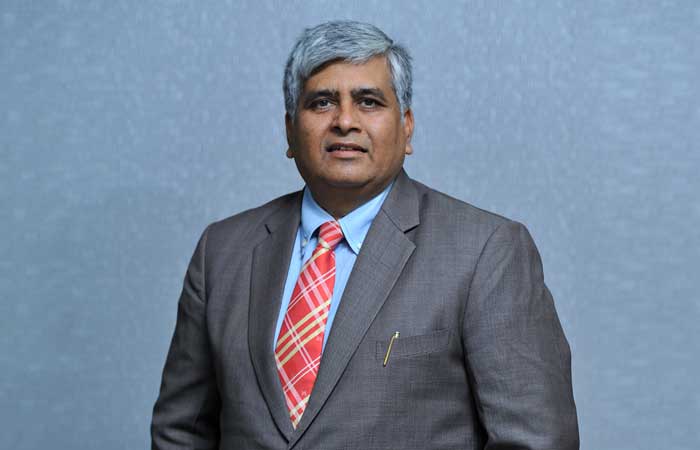
Realisation of textile industry’s huge environmental impact has compelled companies to take the path of sustainability. In this interview, Dr S N Modani, Managing Director, Sangam India Ltd, highlights on the importance of sustainability and how companies are changing their approach towards manufacturing to go green.

Why is sustainability important for the Indian textile & apparels industry?

Historically, the textile industry was known to use large amounts of natural resources like water and energy, causing a huge environmental impact. The high impact along with growing consumer awareness regarding sustainable clothing has compelled the textile industry to take the path of sustainability. It has led to various companies changing their policies and include sustainability as their core concept and avoiding the trap of rapidly changing environmental law regarding the sector.

Could you please share with us some of the sustainability practices adopted by Sangam India?

Sangam India has been strategically shifting its focus on being an environment-friendly conglomerate for the past 5 years. As a responsible brand, we realised the opportunity to create a huge difference environmentally, economically and socially and have successfully followed and executed the practice of zero discharge of water from effluent treatment plants. This plays an important role in treating industrial wastewater responsibly, thereby helping in water preservation as well. We have successfully installed 3 ETPs and 4 STPs across our sites. Apart from that, we also extensively use recycled POY fibres as raw materials for PV fabric knowing its sustainability level. We also utilise solar and wind power as a source of renewable energy consumption.

Is the concept of the circular economy gaining traction in India?

In a world of finite resources, it is crucial to identify and innovate a new and restorative economic model for the world. The concept of circular economy promises a way out, through improved longevity of products, waste minimization, sharing, renting, repair and reuse to maximize product value before returning it to the environment safely.

Given its $ 4.5 trillion global opportunities, innovative businesses and start-ups are already venturing into this space. Many start-ups, which recycle and repurpose e-waste, are operating in India and this is driving the growth of the circular economy.

Previous ArticleGovernment provides financial assistance for garment making NE States
Next Article Lanificio Cerruti to install Itema weaving machines at Biella plant

Related Posts

How 21-year-old Yogeeta Kishore is turning denim waste into livelihoods

September 29, 2026

Rajeev Gupta: Diversification of global supply chains present great opportunity for India

September 25, 2026

Jeanologia demonstrates how sustainability and profitability go hand in hand

September 17, 2026
Recent Posts
  • India drives initiative for sustainable, high-productivity cotton at 5th global summit
  • TMAS members drive sustainability and automation in textile machinery for 2026
  • FICCI TAG 2026 focuses on scaling up India’s textile ecosystem and global competitiveness
  • Maspar debuts Imperial Grace Collection of premium cotton home furnishings
  • VDMA Textile Machinery re-elects Janpeter Horn as Chairman
  • Santosh Katariya to serve another term as CMAI President
  • Jeanologia’s EIM expands beyond finishing to measure full textile supply chain impact
  • Rieter announces leadership transition
Facebook X (Twitter) YouTube LinkedIn
  • About us
  • Contact us
  • Privacy Policy
  • Terms and Conditions

SISTER PUBLICATIONS

Construction World Equipment India Industrial Product Finder Infrastructure Today

© 2026 Indian Textile Journal. All Rights Reserved.

Type above and press Enter to search. Press Esc to cancel.