


This year marks a decisive shift in the textile industry’s evolution. What was once discussed as sustainability strategy is now emerging as material accountability. The recalibration is not taking place on runways or in campaign narratives, but at the fibre level — where climate resilience, traceability, and industrial compatibility are becoming foundational requirements.
Luxury, in particular, is undergoing structural reassessment. As global premium markets mature and regulatory frameworks tighten, creative and sourcing decisions are increasingly influenced by measurable origin intelligence. The defining question is no longer only aesthetic. It is systemic:
Can a fibre deliver refinement, performance, and verifiable responsibility simultaneously?
The coming decade will be shaped by how convincingly the industry answers that question.
Resource intelligence shift
For generations, luxury textiles have relied on resource-intensive natural fibres. Cotton, flax, silk, and wool have built the vocabulary of premium craftsmanship. Yet intensifying water stress, soil degradation, and climate volatility are compelling a reassessment of cultivation models.
Water-dependent crops face increasing scrutiny. Chemical-intensive extraction systems are under regulatory pressure. Meanwhile, traceability mandates—particularly in European markets—signal that origin transparency will soon be as critical as quality certification.
The conversation is shifting from volume efficiency to ecological intelligence.
In this environment, innovation is no longer confined to fabric finishes or performance coatings. It begins at cultivation architecture and extraction methodology. 2025–26 reflects a growing industry realisation: resilience at the fibre level is no longer optional — it is strategic.
Resilient fibre systems
One of the most significant developments in recent years has been the exploration of perennial and wild-origin plant systems. Unlike annual crops requiring repeated irrigation and replanting cycles, perennial biomass regenerates naturally and operates within existing ecological rhythms.
Such systems alter the carbon equation at the source. Reduced irrigation dependency and minimal external inputs create a fundamentally different environmental profile. When paired with mechanical, waterless extraction technologies, the lifecycle footprint narrows further.
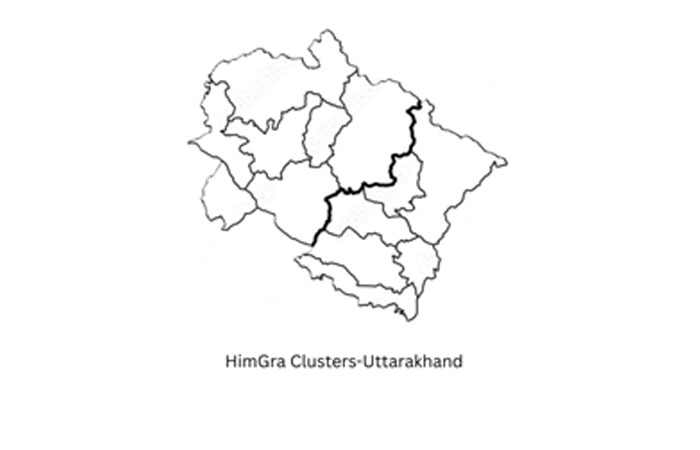
Several initiatives emerging from Himalayan regions illustrate this transition. Wild perennial grasses processed through patented mechanical systems demonstrate how biodiversity-rich ecosystems can contribute to industrially viable fibres. While still scaling, these efforts reflect a broader shift toward regenerative raw material thinking.
The importance of these developments lies not only in environmental claims, but in their compatibility with modern textile infrastructure.
Industrial inflection point
Innovation gains traction only when it aligns with existing systems. The Indian textile industry’s vast spinning, weaving, and finishing infrastructure demands materials that integrate without disruptive reinvention.
Encouragingly, 2025–26 has seen validation of emerging fibres across short staple and long staple spinning frameworks. Blending architectures with cotton, wool, viscose, and silk are being explored successfully. Compatibility with high-speed rapier weaving and conventional dyeing processes further lowers adoption barriers.
This threshold — from experimental fibre to industrially compatible yarn — marks a pivotal transition.
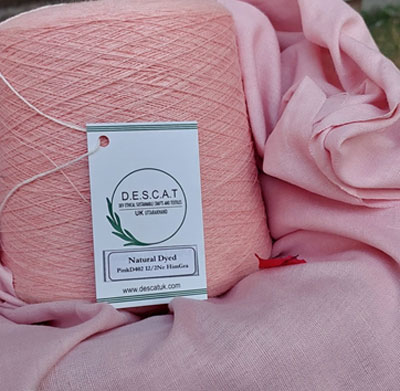
Among the initiatives demonstrating this shift is HimGra, a Himalayan-origin fibre system developed through waterless chemical free extraction technology. Validations across multiple yarn counts and fabric applications illustrate that climate-aligned materials can meet industrial expectations.
Such proof points signal maturity in the innovation cycle.
Luxury’s new definition of value
The premium consumer landscape is evolving alongside material innovation. In key markets across Europe, the Middle East, and Australia, luxury purchasing is increasingly influenced by provenance clarity and environmental alignment.
Yet the aesthetic bar remains uncompromised. A fibre’s sustainability narrative cannot substitute for drape, hand feel, or durability. The emerging expectation is dual excellence — ethical alignment without sensory compromise.
The fibres gaining traction this year share several characteristics:
- Subtle matte luminosity
- Structural softness with integrity
- Natural breathability
- Thermoregulating performance
- Authentic geographic provenance
Designers are responding by curating collections around material intelligence rather than overt ornamentation. Luxury, increasingly, communicates through restraint.
The quiet sophistication of responsibly sourced materials aligns with this aesthetic evolution.
Trade advantage and strategic positioning
India’s position in global luxury supply chains is also shifting. Preferential trade agreements with markets such as the UAE and Australia, alongside ongoing negotiations with the UK and EU, create an environment where differentiated materials can command strategic advantage.
However, tariff access alone does not secure premium positioning. The differentiator will be fibre innovation aligned with traceability compliance and carbon awareness.
If India can offer:
- Climate-resilient cultivation
- Mechanically efficient processing
- Traceable origin documentation
- Industrial compatibility
- Refined tactile performance
then it can compete in the high-value segment not on cost arbitrage, but on material leadership.
2025–26 suggests early movement in this direction. Industry platforms are spotlighting fibre innovation within mainstream trade events. Sustainability pavilions are no longer peripheral exhibits — they are becoming central narratives.
Traceability as creative capital
What was once perceived as regulatory burden is evolving into creative capital. Digital traceability frameworks and product passport systems allow designers to embed origin narratives directly into garment identity.
For premium brands, this transforms fibre from a hidden input into a storytelling foundation.
Verifiable cultivation pathways and documented community engagement add authenticity. The ability to trace a fibre to identifiable ecosystems strengthens brand trust in markets increasingly skeptical of abstract sustainability claims.
In this context, fibre innovation becomes both operational strategy and creative opportunity.
Diversification, not displacement
The transition year is not about replacing heritage fibres. It is about diversifying the material palette.
Blended constructions integrating emerging regenerative fibres with established materials create nuanced tactile expressions while preserving performance reliability. This evolutionary integration reflects maturity within the industry.
Rather than abrupt substitution, the pathway forward lies in hybridisation — pairing traditional craftsmanship with climate-aligned raw materials.
Such diversification strengthens supply chain resilience while expanding aesthetic vocabulary.
Looking beyond
Several trajectories appear clear as the industry moves forward:
- Scaling cultivation clusters to ensure consistency and volume.
- Standardising environmental impact metrics across emerging fibres.
- Embedding digital traceability within export-ready systems.
- Deepening designer collaborations that foreground fibre origin as a core creative element.
The recalibration underway suggests that luxury’s future will be defined less by excess and more by intelligence — less by surface embellishment and more by material integrity.
The fibre of tomorrow must perform, inspire, and withstand scrutiny.
2025–26 will likely be remembered as the year the industry began redesigning luxury from its most fundamental element: the raw material itself.
Executive Summary
This year signals a decisive shift from sustainability rhetoric to fibre-level accountability. Climate-resilient, perennial raw materials are gaining industrial validation, aligning ecological responsibility with commercial scalability. As global luxury markets demand traceability and performance parity, India’s emerging fibre systems — including Himalayan-origin innovations such as HimGra — illustrate how regenerative cultivation and chemical processing can integrate into mainstream textile infrastructure. The transition underway redefines luxury through material intelligence.
About the author:
K D Sharma is a material innovator and Co- founder of Dev Ethical Sustainable Crafts and Textiles, Uttarakhand – DESCATUK, the organization behind HimGra®, a Himalayan fibre developed from wild perennial grass using patented waterless processing technology. His work bridges biodiversity, textile engineering, and luxury design by introducing climate-resilient natural fibres for contemporary fashion and premium textiles. Sharma actively engages with global designers, mills, and sustainability platforms to position Himalayan material innovation within the future landscape of responsible luxury.