


Tariff cut revives export competitiveness and investor sentiment.
The announcement of an India–US trade deal has lifted sentiment across export-oriented sectors, with textiles and apparel emerging as key beneficiaries. Market participants expect strong buying interest in textile stocks, gems and jewellery companies, OEMs, machinery makers and fisheries when trading resumes on February 3, following confirmation of a sharp reduction in US tariffs on Indian goods.
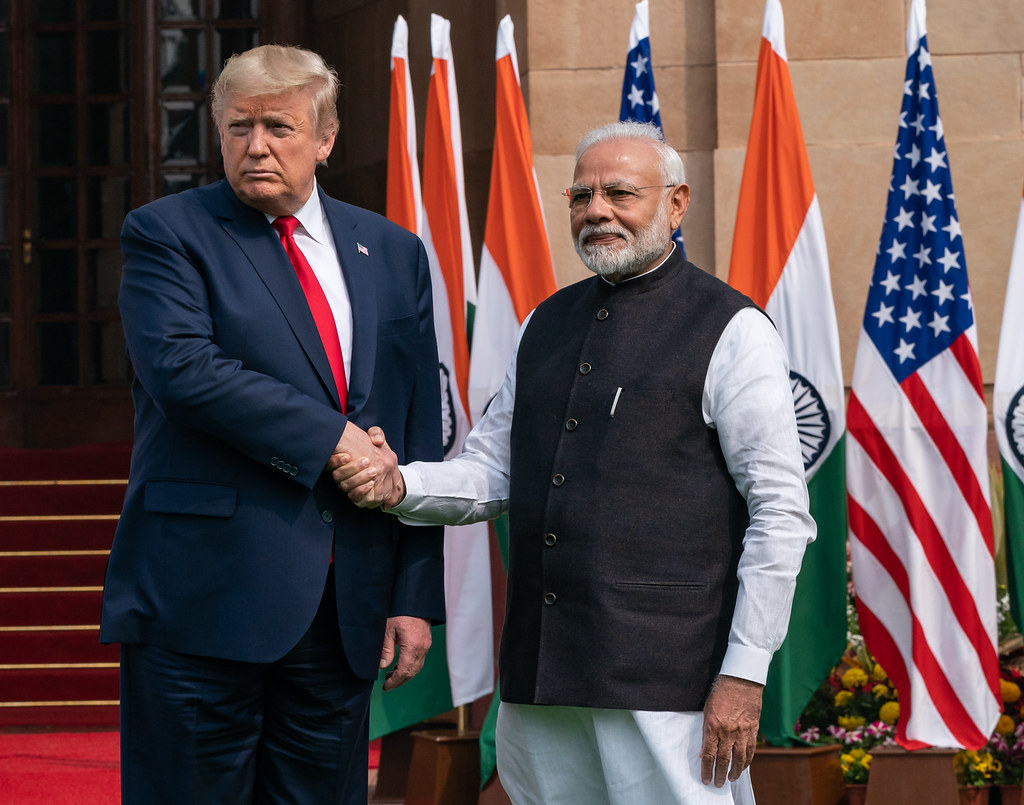
In a post on Truth Social, US President Donald Trump said India’s tariff rate would be reduced from 50 percent to 18 percent, effectively placing Indian exporters on par with several Asian peers. The move is expected to ease cost pressures, restore price competitiveness and support order flows, particularly in labour-intensive sectors that had borne the brunt of the higher duties.
Industry experts had earlier flagged that the 50 percent tariff had materially curtailed Indian exports to the US, triggering second-order impacts on employment-heavy industries such as textiles and gems and jewellery. The elevated duties also weighed on investor confidence, contributing to foreign portfolio investor (FPI) outflows. With tariffs now moderated, analysts expect a gradual improvement in export momentum and a possible reversal in FPI selling.
The textiles and apparel sector stands to gain significantly. Nearly 32 percent of India’s total textile exports are destined for the US, making the sector particularly vulnerable to trade disruptions. Following the imposition of the higher tariffs, both large listed companies and smaller players witnessed sharp selling pressure amid concerns over margins and demand visibility.
The revised tariff regime is expected to change that narrative. At an 18 percent duty, Indian textile and apparel exports are once again seen as competitive relative to other Asian sourcing hubs. This is likely to aid order diversification, improve capacity utilisation and support employment across the value chain, from fibre and yarn to finished garments.
Overall, the India–US trade deal is being viewed as a positive inflection point for export-led sectors, with textiles at the centre of renewed optimism.
Industry experts have expressed optimism over the development and shared their views below:

Pallab Banerjee, Managing Director, Pearl Global Industries: This is the news, our industry was holding our breath for. Although at Pearl Global we are better diversified compared to other players of India. We too get the advantage in the India portion of our business.
Most of us (trade)were giving a discount to US customers to compensate for the penalty tariff. Now that’s gone and India gets a 2 per cent advantage on tariff as compared to competing countries. The last 2 months of Q4 should get relief from this painful bottomline pressure. Q2 of next year onwards India should see an improved top line as well from the US market.
The brakes that were on for the last 6 months are being removed thanks to our leaders and the announcement of this deal.
We heard in our budget about the push for infrastructure, capex, ease of doing business, skill development, raw material and tying this up with excellent trade deals is excellent for India’s future in manufacturing and exports.

Rajeev Gupta, Joint Managing Director, RSWM: The India–US trade deal’s sharp tariff reduction from 50% to 18% provides India with a 2 per cent cost advantage over competitors such as Bangladesh and Vietnam, significantly strengthening our global competitiveness. This long-pending agreement has already stirred revival among the stalled or delayed US orders. These orders make up nearly 28 per cent of India’s textile exports. Combined with internal duty exemptions and a Budget that meaningfully strengthens textile competitiveness and domestic value chains, the timing is ideal to accelerate exports, support jobs across MSME clusters, and improve financial margins in the coming quarters..
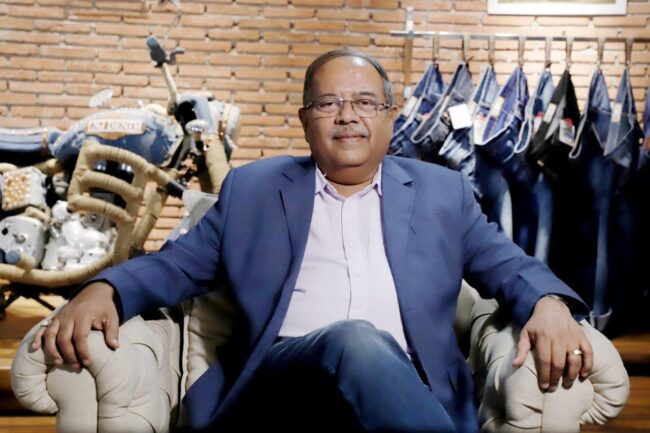
Suketu Shah, CEO, Vishal Fabrics: After several months of closely followed negotiations and tariff issues, the India-US trade agreement is a positive development towards trade and exports. The US tariff on Indian products was as high as 50% on most Indian exports, which has now been lowered to 18%, making India more competitive in the US market, especially in the manufacturing category.
The trade agreement provides several opportunities for diversified markets and accelerates scale-up plans for many textile and apparel categories. We think the true impact will be a function of how quickly the changes can be implemented and how well manufacturers can navigate cost and scale.

Sammir Dattani, Executive Director, Sanathan Textiles: The US – India trade agreement represents a meaningful reset for India’s textile sector, bringing long-awaited clarity after an extended period of tariff-related uncertainty. Elevated duties had weighed on demand from the US India’s largest export market but the reduction of reciprocal tariffs to around 18% materially improves cost competitiveness. With the US accounting for nearly 28% of India’s textile and apparel exports, this easing of trade barriers provides a clear pathway for a gradual recovery in demand. This development is particularly positive for Sanathan Textiles, given its diversified presence across polyester yarns, cotton yarns, and yarns for technical textiles, all of which have strong relevance in the US market.
As US buyers reassess and rebalance their sourcing strategies, Indian manufacturers are positioned to gain a relative advantage over competing supplier countries, reinforcing India’s role in global supply chains. This shift is expected to translate into a steady revival in order flows, improved pricing discipline, and progressive margin stabilisation across the sector. Sanathan Textiles is well-prepared to scale up exports to the US, supported by strong logistics linkages and execution capabilities.

Ashwin Chandran, Chairman, Confederation of Indian Textile Industry (CITI): The Confederation of Indian Textile Industry (CITI) heartily welcomes the announcement of the trade deal between the US and India and the reduction in the US tariff on Indian goods to 18%. CITI would like to express its sincere gratitude to both the US President, Mr Donald Trump and Indian Prime Minister, Shri Narendra Modi, for this trade deal. This reduction in tariff will ensure our textile and apparel exporters are once again in a position to compete effectively in the US market, the single-largest market for India’s textile and apparel exports. This deal will also ensure that factories can run at full steam once more and job creation can get back to previous levels.

Mannil Balakrishnan Raghunath, CEO, Mafatlal Industries Limited
The recent US–EU trade developments mark a defining moment for the Indian textile and apparel industry. The combined impact of US tariff rationalisation and the India–EU trade agreement significantly enhances cost competitiveness, policy predictability, and long-term visibility for exporters. Together, these markets account for nearly 35–40% of global apparel and textile imports. Access to such a large and stable consumption base under more favourable trade conditions represents a structural shift, one that enables deeper sourcing relationships and positions India as a more reliable and strategic partner in global supply chains.
For Mafatlal Industries, this is both an opportunity and a responsibility. As a 120+ year institution rooted in the legacy of Indian textiles, we have built enduring relationships in the US and Europe based on quality, reliability, and execution excellence. Demand from these markets, particularly the US, has consistently validated our manufacturing strength and product integrity. Over time, this has also shaped our evolution from a strong textile and institutional supplier to a fully integrated player with growing capabilities in apparels.
With improved tariff clarity, we are now accelerating our scale-up across textiles, apparels, and uniform markets. Our apparel business is a natural extension of our legacy, allowing us to move closer to global customers with finished products while retaining the same standards of craftsmanship, compliance, and consistency that have defined us for decades.
We have the manufacturing bandwidth, technical expertise, and on-ground resources to serve these markets at scale. Our expansion strategy is anchored in disciplined operating systems, strong compliance frameworks, and a deep understanding of global customer expectations. More importantly, it is built on trust cultivated over generations.
This evolving trade landscape is not merely about incremental export growth, but about strengthening India’s position as a dependable, long-term sourcing hub. At Mafatlal, our focus remains on building enduring partnerships in markets that value consistency, credibility, and long-term commitment. Mafatlal reinforces its commitment to “Make in Bharat for the World”, blending heritage, innovation, value creation, and responsibility to deliver apparel that resonates with both domestic and global markets.