Close Menu
Indian Textile Journal
  • Home
  • Market and Economy
    • Apparels & Garments
    • Fibres & Raw Materials
    • Home Textiles
    • Industry Update
  • Textile Machinery
    • Allied Equipment and Accessories
    • Automation
    • Dyeing, Processing & Finishing
    • Knitting
    • Printing
    • Spinning
    • Weaving
  • Tech Textiles
  • Sustainability
  • Resources
    • Trade Fair
    • Events
    • Videos
  • Interview & Opinion
  • Subscribe Now
  • Advertise
  • Digital
Facebook X (Twitter) YouTube LinkedIn
Indian Textile Journal
Epson
  • Home
  • Market and Economy
    • Apparels & Garments
    • Fibres & Raw Materials
    • Home Textiles
    • Industry Update
  • Textile Machinery
    • Allied Equipment and Accessories
    • Automation
    • Dyeing, Processing & Finishing
    • Knitting
    • Printing
    • Spinning
    • Weaving
  • Tech Textiles
  • Sustainability
  • Resources
    • Trade Fair
    • Events
    • Videos
  • Interview & Opinion
  • Subscribe Now
  • Advertise
  • Digital
Indian Textile Journal
Home » Vietnam eyes $200 bn textile exports by 2035
Industry Update

Vietnam eyes $200 bn textile exports by 2035

By May 30, 20181 Min Read
Share Facebook Twitter LinkedIn WhatsApp Copy Link

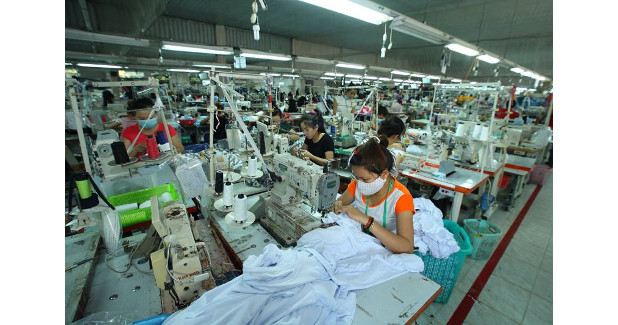
Vietnam’s textile and garment industry is expecting exports to reach up to $200 billion by 2035 thanks to investment in new technology and automation, and a shift in production methods. In 2017, Vietnam exported $31.2 billion worth of textiles and garments – an increase of 10.2 per cent on the prior year – with the figure expected to reach $34.5 billion in 2018 as the country looks to invest more in technology to increase productivity and shorten delivery times, and increase its focus on markets such as Australia and Russia.

Vu Duc Giang, Chairman of the Vietnam National Textile and Garment Group, says that new spinning mills in the country’s textile industry are equipped with modern equipment and high automation, requiring fewer workers.

The apparel industry, however, is more difficult to automate than the yarn industry. Giang says but some new plants are equipped with automation. In particular, garment enterprises ar not looking to expand their scale but shift production from Cut-Make-Thin (CMT) to Free on Board (FOB) and original design manufacturing to increase value.

Previous ArticleNew-gen KERN-LIEBERS Relanit Sinkers
Next Article Elgi Equipments nets Rs 76.9 cr profit

Related Posts

PDS earns Great Place to Work recognition in 10 countries

June 2, 2026

Turkmenistan sees focus on high-tech Italian textile machinery

May 29, 2026

RIICO begins plot allotment at Rupaheri Textile Park in Bhilwara

May 18, 2026
Recent Posts
  • CMAI launches used clothes upcycling drive
  • Trützschler IDF 3 unlocks short fibre processing potential
  • World Environment Day 2026 – 5 wardrobe choices combining style and sustainability
  • MiRooh unveils cosmic candy bedroom collection
  • CMAI hosts AI Masterclass to guide clothing businesses into the digital era
  • PDS earns Great Place to Work recognition in 10 countries
  • NITMA welcomes cotton import duty waiver
  • Cotton imports exempted from customs duty
Facebook X (Twitter) YouTube LinkedIn
  • About us
  • Contact us
  • Privacy Policy
  • Terms and Conditions

SISTER PUBLICATIONS

Construction World Equipment India Industrial Product Finder Infrastructure Today

© 2026 Indian Textile Journal. All Rights Reserved.

Type above and press Enter to search. Press Esc to cancel.